
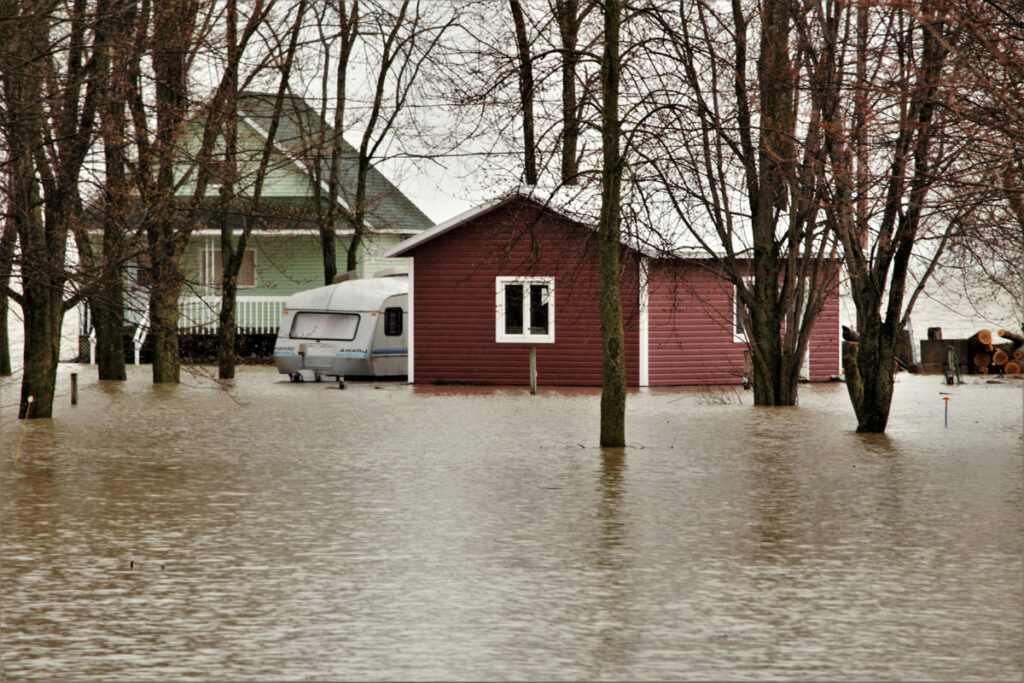
Subject to popular belief weather bombs are increasing in frequency across NZ so to help understand more about what homeowners could learn to manage and prevent against potential risks to our properties.
Heavy rain can do more than flood gutters and soak lawns. In some cases, it can trigger ground movement beneath your home, leading to subsidence, weakening of the soils and uneven floors.
If you’ve noticed new cracks or movement after a storm event, here’s what may be happening — and what to look for.
What is subsidence?
Subsidence occurs when the ground beneath a structure loses strength, support, or volume, causing the building above to settle unevenly.
This loss of support can develop gradually through consolidation, or more suddenly following heavy rainfall. Intense or prolonged rain can soften soils, increase pore water pressure, or wash out fine material, reducing the ground’s ability to carry load and resulting in sudden settlement.
After a significant storm, subsidence risk can increase — particularly in parts of Auckland and Waikato with variable soil conditions.
Why storms can trigger ground movement
Storm events introduce large volumes of water into the ground over a short period. This can affect soil behaviour in several ways:
- Soil Softening
- Certain clay and silt soils lose strength when saturated. As the soil softens, it may compress under the weight of the home.
- Erosion and Washout-
High water flow can wash fines out of supporting soils, particularly around:- Drainage lines
- Service trenches
- Poorly compacted fill
- This creates voids or reduced bearing capacity beneath slabs and footings.
- Peat and Organic Soils (Common in Waikato)- Peat soils are highly compressible. When saturated, they can consolidate further, resulting in settlement.
- Blocked or Failed Drainage
- Stormwater systems that cannot cope with high rainfall may direct water toward foundations, increasing saturation and instability.
How to tell if movement is weather related
Not all cracks mean subsidence.
However, warning signs that movement may be linked to a recent storm include:
- Cracks that appeared suddenly after heavy rainfall
- Doors that were operating normally but now stick
- Visible settlement of patios, driveways, or paths
- Water ponding around the house perimeter
- Timing is important. If damage coincides with a major weather event, ground saturation may be a contributing factor.
Should You Be Concerned?
Minor cosmetic cracking can occur in many homes and does not always indicate structural instability.
However, you should seek further investigation if:
- Cracks are wider than 3–5mm
- Floors feel noticeably uneven
- Movement appears to be ongoing
- There is visible separation at expansion joints
- External slabs have dropped relative to the house
- The key question is not whether cracks exist — but whether the supporting ground has changed.
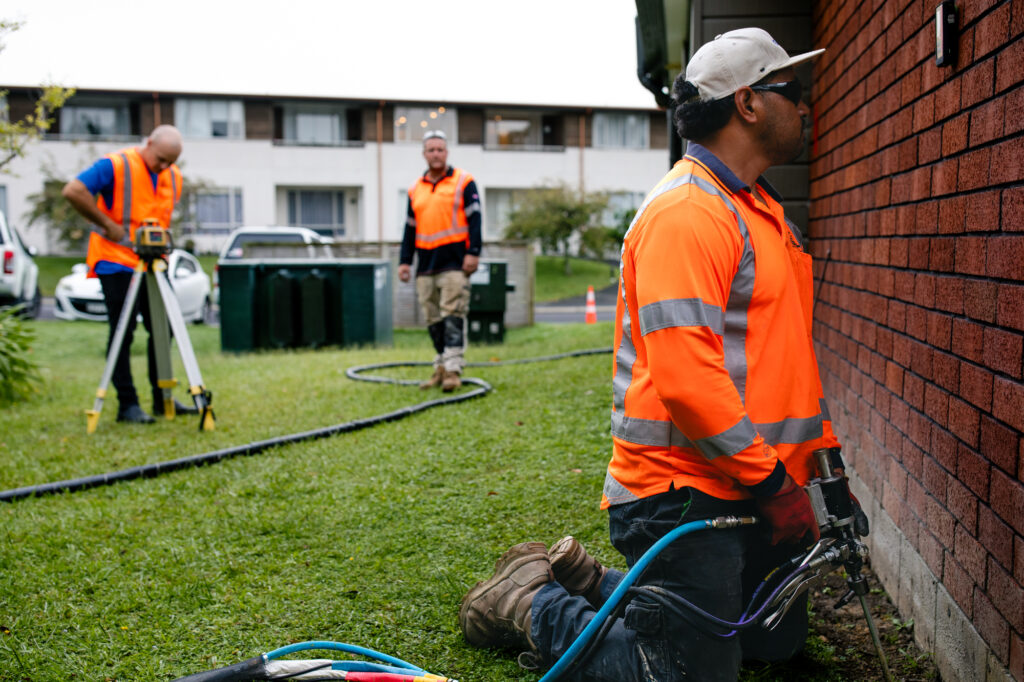
Investigation before intervention
Storm-related subsidence should never be approached as a “quick fix.” Before any remediation method is selected, the following should be understood:- Soil type and moisture behaviour
- Extent and depth of settlement
- Whether movement is ongoing
- Presence of voids beneath slabs
- Condition of drainage infrastructure
- In some cases, no structural intervention is required — only drainage correction.
- In other cases, ground stabilisation may be appropriate.
When is resin injection suitable?
Polyurethane resin injection can be used to:- Fill voids created by washout
- Improve bearing support beneath slabs
- Re-level settled concrete where appropriate
- However, it is not suitable for all conditions.
- If settlement is deep or caused by ongoing soil consolidation, alternative engineered solutions may be required.
- The correct solution depends on the mechanism of movement — not the symptom.
What you should do after a storm
If you suspect storm-related subsidence:- Document any new cracks or movement with photos.
- Monitor whether cracking progresses over several weeks.
- Check drainage outlets and downpipes for blockage or overflow.
- Avoid cosmetic patch repairs until cause is understood.
- Seek an engineering-led assessment if movement appears structural.
- Early investigation often prevents more extensive remediation later.
The bottom line
Storms can expose underlying ground weaknesses — but not all post-storm cracking is serious. The important step is determining whether:- The soil has softened temporarily
- A void has formed beneath the slab
- Or a deeper settlement mechanism is occurring
- Understanding the cause allows the solution to be designed appropriately.
How to Reduce the Risk of Subsidence
Most subsidence is linked to poor moisture control around foundations. You can reduce the risk by:
- Keeping gutters and stormwater clear and draining away from the house
- Fixing leaking pipes or drains promptly
- Ensuring ground levels fall away from foundations
- Being mindful of large trees near the building
- Acting early if you notice cracks, sticking doors, or sloping floors

Want to talk to an industry expert?
GSI Residential provides engineered solutions for ground movement, subsidence, foundation instability, and re-levelling.